
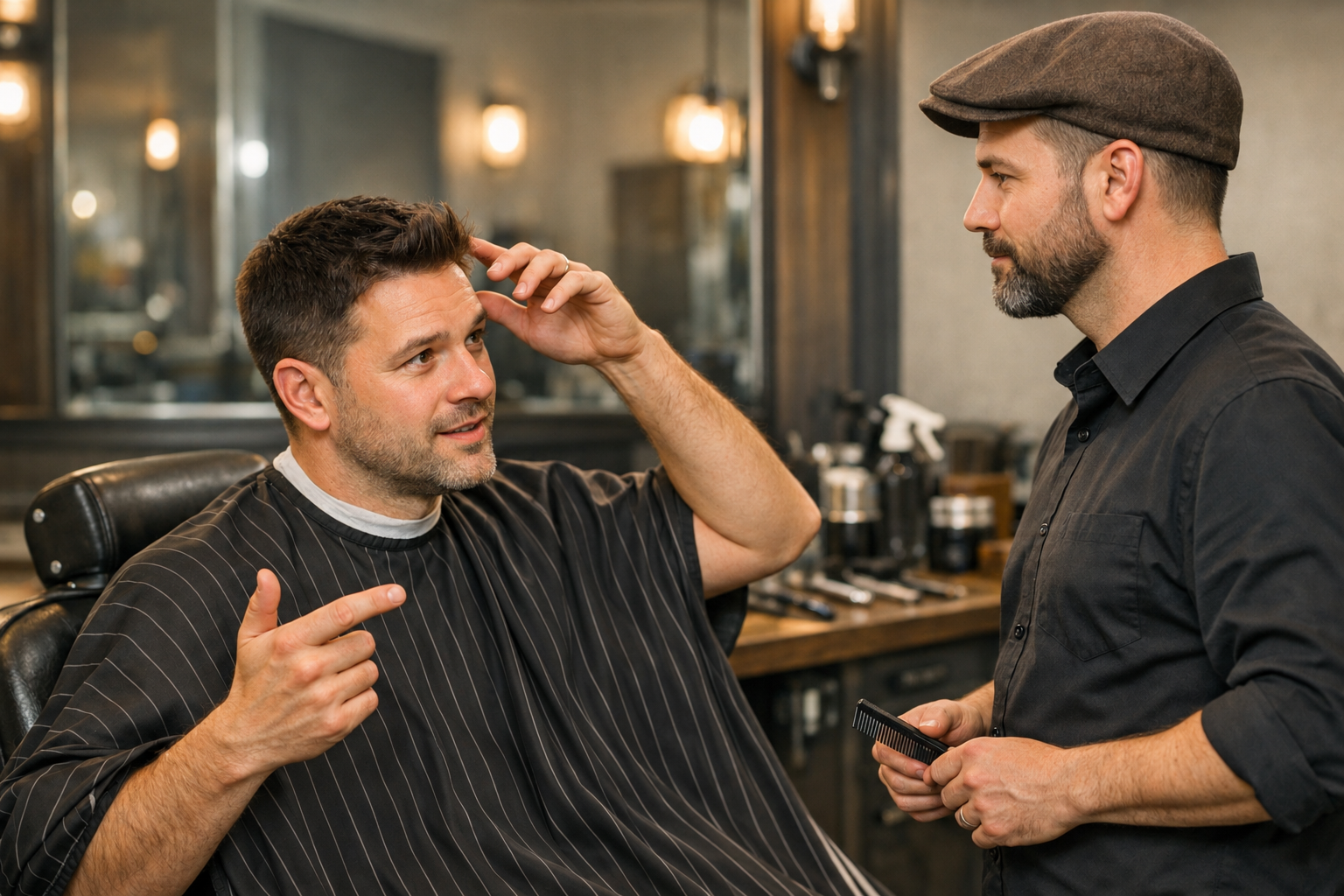
If you were not completely satisfied with your last haircut, tell your barber calmly and describe the specific result you want changed. Learning how to give your barber feedback means focusing on visible details such as length, shape, weight or fade placement rather than simply saying the haircut felt wrong.
Constructive feedback is not rude. It gives your barber useful information for refining the next cut, provided you explain your priorities before more hair is removed.
Why Specific Barber Feedback Is More Useful
Comments such as “I did not like it” or “the sides looked strange” communicate dissatisfaction, but they do not identify the adjustment you want. Your barber needs to know which area bothered you, when you noticed the issue and how you normally style your hair.
Try to separate the haircut into practical details:
- Was the top shorter than you expected?
- Did the sides retain too much weight?
- Was the fade higher or more contrasted than you wanted?
- Did the fringe become difficult to style?
- Did the neckline or sideburns grow out differently than you preferred?
The more precisely you identify the result, the easier it is to discuss a realistic change. Natural growth patterns, styling habits and the amount of remaining length can all affect what a barber can adjust during the next appointment.
How to Give Your Barber Feedback Without Making It Personal
Keep the conversation centered on the haircut rather than the barber. A useful structure is to explain what worked, identify one or two details you want changed and describe the result you would prefer.
The Center for Creative Leadership’s feedback framework recommends describing a specific situation, observable behavior and its impact instead of relying on assumptions or personal judgments. Although developed for workplace communication, the same basic principle can make haircut feedback clearer.
For example, you could explain that the side length worked well, but the top was too short to style backward. You might say that you liked the overall shape but would prefer the fade transition to begin lower. If the haircut looked good initially but became bulky after a week, mention where that weight appeared.
Learning how to give your barber feedback does not require technical vocabulary. Clear descriptions of what you saw, how you styled the cut and what you want to preserve are more useful than guessing clipper numbers or cutting techniques.
Should You Bring Photographs of the Previous Haircut?
Photographs can help when the issue is difficult to describe. If possible, bring an image from shortly after the haircut and another showing how it looked after several days of normal washing and styling. Front, side and back views can reveal differences in shape, balance and weight distribution.
You can also bring a reference photograph showing your preferred result. Use it to identify individual elements you like rather than expecting an exact copy. Hair texture, density, growth direction and starting length may require the barber to adapt the idea. The PHD Barbers article about how experienced barbers use reference photos explains which angles and details make an image useful.
When considering how to give your barber feedback, remember that a photograph should support the conversation, not replace it. Tell the barber whether you are highlighting the top length, side profile, fringe, fade height or overall silhouette.
When Should You Speak Up About a Haircut?
Before cutting begins
The consultation is the best time to discuss your previous result. Explain what you want to keep, what you want changed and which areas must not become shorter. If you are growing the top or preserving fullness near the crown, establish that priority immediately.
During the haircut
You do not need to evaluate every movement or tool. However, speak up promptly if you notice that the haircut is moving toward an obviously different length, fade height or outline than you discussed. Asking a short clarifying question is better than waiting until an irreversible amount of length has been removed.
During the final mirror check
Use the final review to inspect the front, both sides and back. Arrange the hair in the direction you normally wear it and ask about any remaining heavy areas or uneven-looking transitions. You can learn more about the details involved in checking a completed haircut from several angles.
Can Every Haircut Concern Be Corrected Immediately?
No. Excess length or isolated weight can often be reduced, but hair that has already been cut too short cannot be restored during the appointment. Trying to match every area to the shortest section may remove more length than you want.
If a problem becomes apparent after you leave, wash and style your hair normally before judging the cut. Product buildup, sleep or an unfamiliar styling direction can temporarily make balanced sections appear different. If the concern remains, identify the exact area and avoid attempting a major correction at home. The guide to correcting an uneven haircut while preserving length covers the factors a barber may need to evaluate.
Preparing Your Feedback for an East Village Appointment
Before visiting an East Village barbershop, write down your two most important priorities. Decide what you liked, what you want changed and how much daily styling you are willing to do. Bring photographs when they clarify the issue, and arrive with enough existing length for the barber to assess your natural growth and current shape.
The easiest way to apply how to give your barber feedback is to begin with a haircut consultation rather than waiting until the service is nearly complete. PHD Barbers offers haircuts and other professional grooming options at its single East Village location. Review the current PHD Barbers services and pricing before selecting your appointment.
Frequently Asked Questions
Is it rude to tell a barber that you disliked a previous haircut?
No. Respectful, specific feedback helps clarify your preferences. Discuss the visible result and the adjustment you want without making assumptions about the barber’s intentions or ability.
Should I give feedback during or after the haircut?
Discuss previous concerns before cutting begins. During the service, speak up if the direction differs clearly from the consultation. Use the final mirror check for small refinements involving weight, balance or outlines.
Can a barber fix hair that was cut too short?
A barber cannot replace removed length. Depending on the haircut, it may be possible to rebalance surrounding areas, change the styling direction or create a plan for growing the shorter section out.
Can I bring feedback to my next PHD Barbers appointment?
Yes. Prepare concise notes and useful photographs, then explain what you want to preserve or change during the consultation for your East Village haircut.
Make Your Next Haircut Conversation More Productive
Knowing how to give your barber feedback can turn general dissatisfaction into a clear plan. Focus on specific areas, explain how the haircut behaved outside the shop and establish your length and styling priorities before the service begins.
For a professional haircut consultation in Manhattan, visit PHD Barbers at 228 Avenue B, New York, NY 10009, or call (212) 510-7985. Book an appointment at PHD Barbers and bring the details or reference photographs that will help communicate your preferred result.